


Glossary of Technical Terms in the Battery Industry
Active Material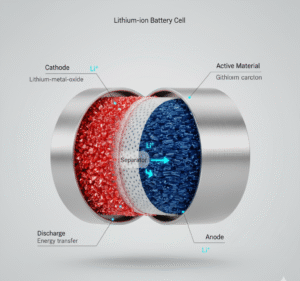
The active electro-chemical materials used in the manufacture of positive and negative electrodes.

Absorbent Glass Mat (AGM)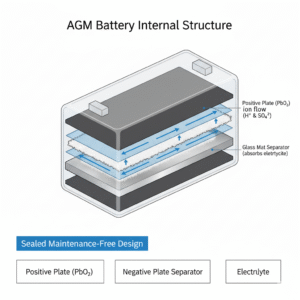
A type of lead-acid battery that uses a glass mat to promote the recombination of gases produced by the charging process.

Ambient Temperature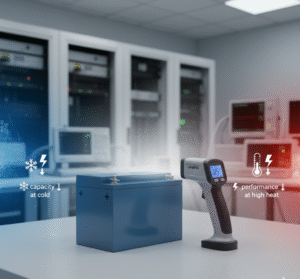
The prevailing surface temperature to which a battery is exposed.

Ampere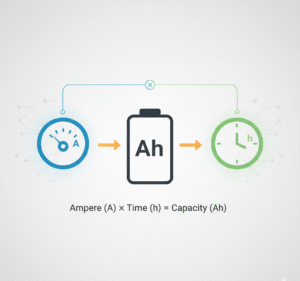
Unit of measurement for electric current.
Ampere-Hour
The product of current (amperes) multiplied by time (hours). Used to indicate the capacity of a battery. Also referred to as Amp. Hr. or A.H.
Anode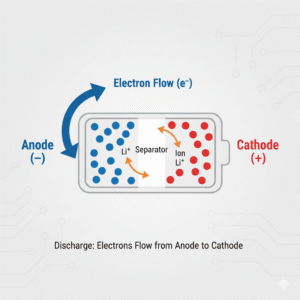
Electrode that releases electrons on discharge. When applying power to a device, the anode is positive; when taking power away on discharge, the anode turns negative.
Battery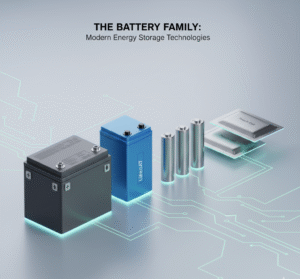
Two or more cells connected together in series or parallel. See guide on how to connect in series/parallel.
BESS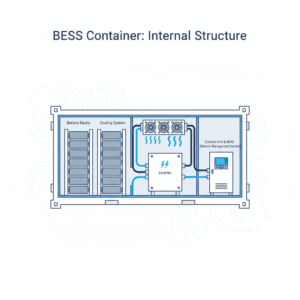
Battery Energy Storage System, sometimes referred to as ESS.
BMS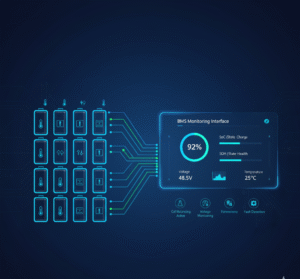
Battery Management System used inside or outside a battery to manage charge, discharge, and provide SoC, SoH data. Used to protect the battery and maximize service life.
Bluetooth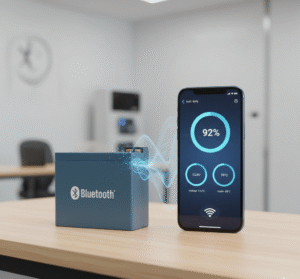
Low-power radio communications up to 10 meters (30 feet). Power Sonic Lithium Bluetooth batteries utilize Bluetooth in combination with a BMS to give instant access to the status of the battery from a smart device.
Used to signify a charge or discharge rate equal to the capacity of a battery divided by one hour. Thus C for a 2000 mAh battery would be 2.0 A. C/5 for the same battery would be 400 mA, and C/10 would be 200 mA. More information can be found on what is a battery C-rate.
Capacity
The electrical energy available from a cell or battery expressed in ampere-hours.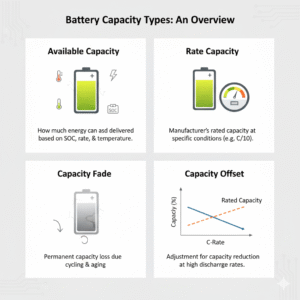
- Available Capacity: Ampere-hours that can be discharged from a battery based on its state of charge, rate of discharge, ambient temperature, and specified cut-off voltage.
- Rate Capacity: The discharge capacity the manufacturer states may be obtained at a given discharge rate and temperature.
- Capacity Fade: The loss of capacity due to inadequate recharging.
- Capacity Offset: The correction of capacity when discharging a battery at a higher C-rate than specified.
Cathode
Electrode in a cell in which reduction takes place by absorbing electrons. During discharge, the cathode is positive; during charge, it is reversed and becomes negative.
Cell
The basic building block of a battery. The nominal voltage of a lead-acid cell is 2 volts, and a LiFePO4 cell is 3.2 volts.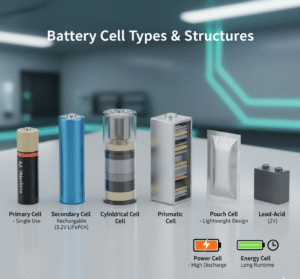
- Secondary Cell: The process is reversible so that charging and discharging may be repeated over and over.
- Primary Cell: Cell or battery that can be discharged only once, cannot be recharged for further use. Examples include alkaline manganese-Zinc.
- Cylindrical Cell: Positive and negative plates are rolled up and placed into a cylindrical container. Examples include AA and 18650 cells.
- Prismatic Cell: A battery where the positive and negative plates are stacked as opposed to rolled.
- Pouch Cell: Packaged into a flexible, heat-sealable foiled pouch.
- Power Cell: Cell designed for maximum current delivery, high rate of discharge.
- Energy Cell: Cell designed for maximum capacity, longer cycle life.
Charge
The conversion of electrical energy to chemical energy; the process which restores electrical energy to a cell or battery.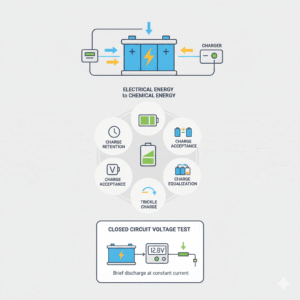
- Charge Retention: A battery’s ability to hold a charge. It diminishes during storage.
- Charge Acceptance: Quantifies the amount of electric charge that accumulates in a battery.
- Float Charge: Maintains the capacity of a cell or battery by applying a constant voltage.
- Trickle Charge: Maintains the capacity of a cell or battery by applying a small constant current.
- Charge Equalization: Brings all of the cells in a battery or string to the same state of charge.
Closed Circuit Voltage Test
A test method in which the battery is briefly discharged at a constant current while the voltage is measured.
Coulomb
Unit of electric charge. One coulomb (1C) equals one ampere-second (1As).
Cut-off Voltage
The final voltage of a cell or battery at the end of charge or discharge.
Cycle
A single charge and discharge of a cell or battery.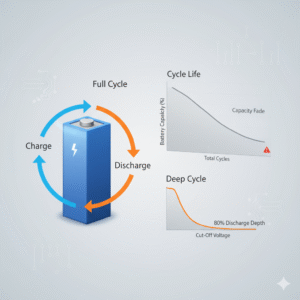
- Cycle Life: Total number of cycles a battery can deliver until it reaches the end of life.
- Deep Cycle: A cycle in which the discharge continues until the battery reaches its cut-off voltage, usually 80% of discharge for a lead-acid battery.
Direct Current (DC)
The type of electrical current that a battery can supply. One terminal is always positive, and the other is always negative.
Discharge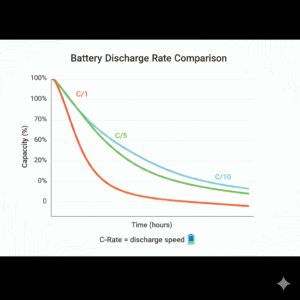
The process of drawing current from a battery.
- Deep Discharge: The discharge of a cell or battery to between 80% and 100% of rated capacity.
- Deep of Discharge (DoD): The amount of capacity, typically expressed as a percentage, removed during discharge.
- Self Discharge: The loss of capacity while stored or while the battery is not in use.
Drain
The withdrawal of current from a battery.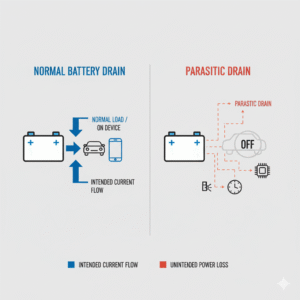
- Parasitic Drain: When power continues to be drained from a battery after the vehicle engine is off.
Electrode
Positive or negative plate containing materials capable of reacting with electrolyte to produce or accept current.
Electrolyte
Conducts ions in a cell. Lead-acid batteries use a sulfuric acid solution.
End of Charge Voltage
The voltage reached by the cell or battery at the end of charge, while the charger is still attached.
Energy Density
Ratio of battery energy to volume or weight expressed in watt-hours per cubic inch/mm or pound/kilogram.
Gas Recombination
The process by which oxygen gas generated from the positive plate during the final stage of charge is absorbed into the negative plate, preventing the loss of water.
High Rate Discharge
A very rapid discharge of the battery. Normally in multiples of C (the rating of the battery expressed in amperes).
Hydrometer
Device used to measure the specific gravity of a fluid, reads the state-of-charge of flooded lead-acid batteries.
Impedance
The resistive value of a battery to an AC current expressed in ohms (Ω). Generally measured at 1000 Hz at full charge.
Internal Resistance
The resistance inside a battery which creates a voltage drop in proportion to the current draw.
Lithium-Ion Battery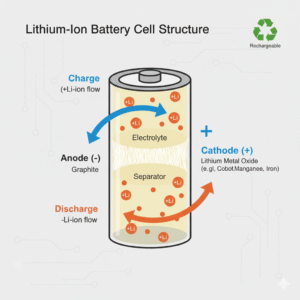
Rechargeable battery with cobalt, manganese, iron and/or other metals as cathode and graphite anode.
Negative Terminal
The terminal of a battery from which electrons flow in the external circuit when a battery discharges.
Nominal Capacity
The nominal value of rated capacity.
Nominal Voltage
The nominal value of rated voltage.
Open Circuit Voltage
The voltage of a battery or cell when measured in a no-load condition.
Overcharge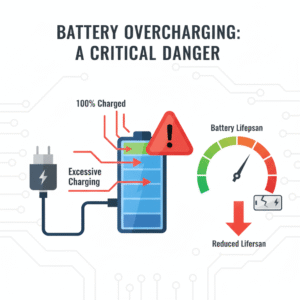
The continuous charging of a cell after it achieves 100% of capacity. Battery life is reduced by prolonged overcharging.
Parallel Connection
Connecting a group of batteries or cells by linking all terminals of the same polarity. This increases the capacity of the battery group.
Polarity
The charges residing at the terminals of the battery.
Positive Terminal
The terminal of a battery toward which electrons flow through the external circuit when the cell discharges.
Rated Capacity
The capacity of the cell expressed in amperes. Commonly, a constant current for a designated number of hours to a specified depth of discharge at room temperature.
Recombination
The state in which the gasses normally formed within the battery cell during its operation are recombined to form water.
Series Connection
The connection of a group of cells or batteries by linking terminals of opposite polarity. This increases the voltage of the battery group.
Self Discharge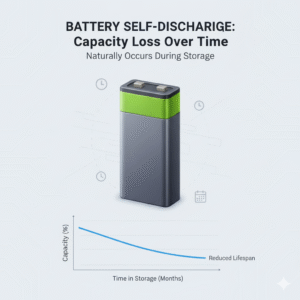
The loss of capacity of a battery while in storage or unused condition without external drain.
Separator
Material isolating positive from negative plates. In sealed lead-acid batteries, it normally is absorbent glass fiber to hold the electrolyte in suspension.
SLA Battery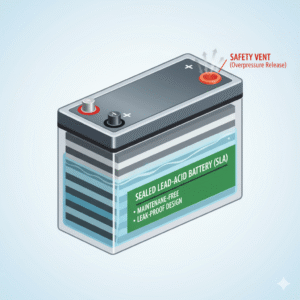
Sealed lead-acid battery, generally having the following characteristics: Maintenance-free and leak-proof. Batteries of this type have a safety vent to release gas in case of excessive internal pressure build-up.
Service Life
The expected life of a battery expressed in the number of total cycles or years of standby service to a designated remaining percentage of original capacity.
Shelf Life
The maximum period of time a battery can be stored without top-up charging.
Standby Service
An application in which the battery is maintained in a fully charged condition by trickle or float charging.
State of Charge (SoC)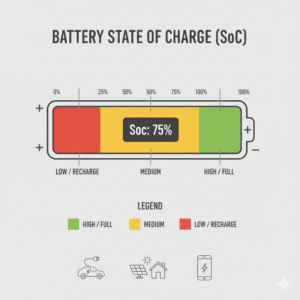
The available capacity of a battery at a given time expressed as a percentage of rated capacity.
State of Health (SoH)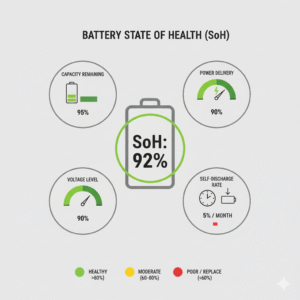
Reflects battery performance that verifies capacity, current delivery, voltage, and self-discharge; measured as a percentage.
Sulfation
The formation or deposit of lead sulfate on the surface and in the pores of the active material of the battery’s lead plates.
Thermal Runaway
A condition in which a cell or battery on constant potential charge can destroy itself through internal heat generation.
Valve Regulated Lead Acid (VRLA) Battery
See ‘SLA Battery.’
Watt
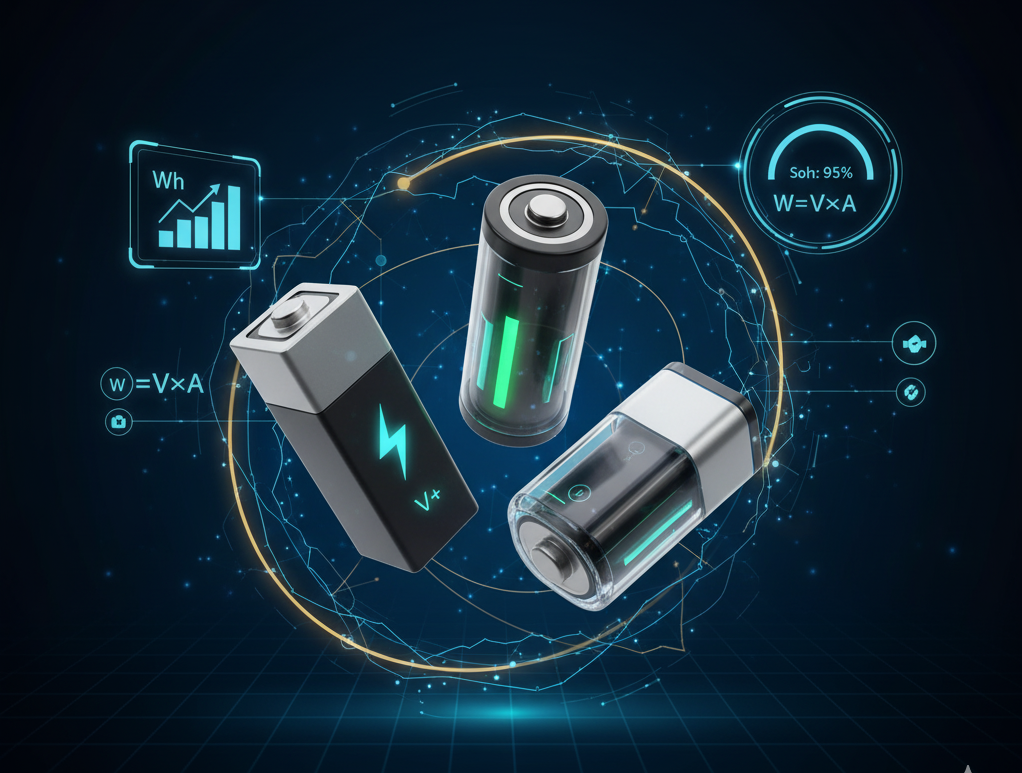
Unit of power; ampere (A) times volt (V) equals watts (W).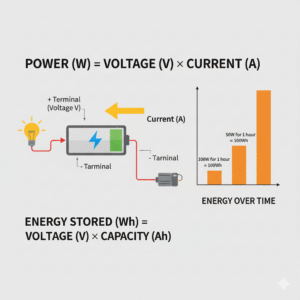
Watt-Hour
Unit of electrical energy equivalent to a power consumption of one watt for one hour. Multiplying a battery voltage (V) by the rated capacity (Ah) gives the battery energy in Wh.